If you hear the word “blog” and think:
“Isn’t that outdated?”
“Does anyone even read blogs anymore?”
“Isn’t Instagram enough?”
“How am I going to keep up with that?”
Don’t worry, you’re not alone.
Here’s the truth:
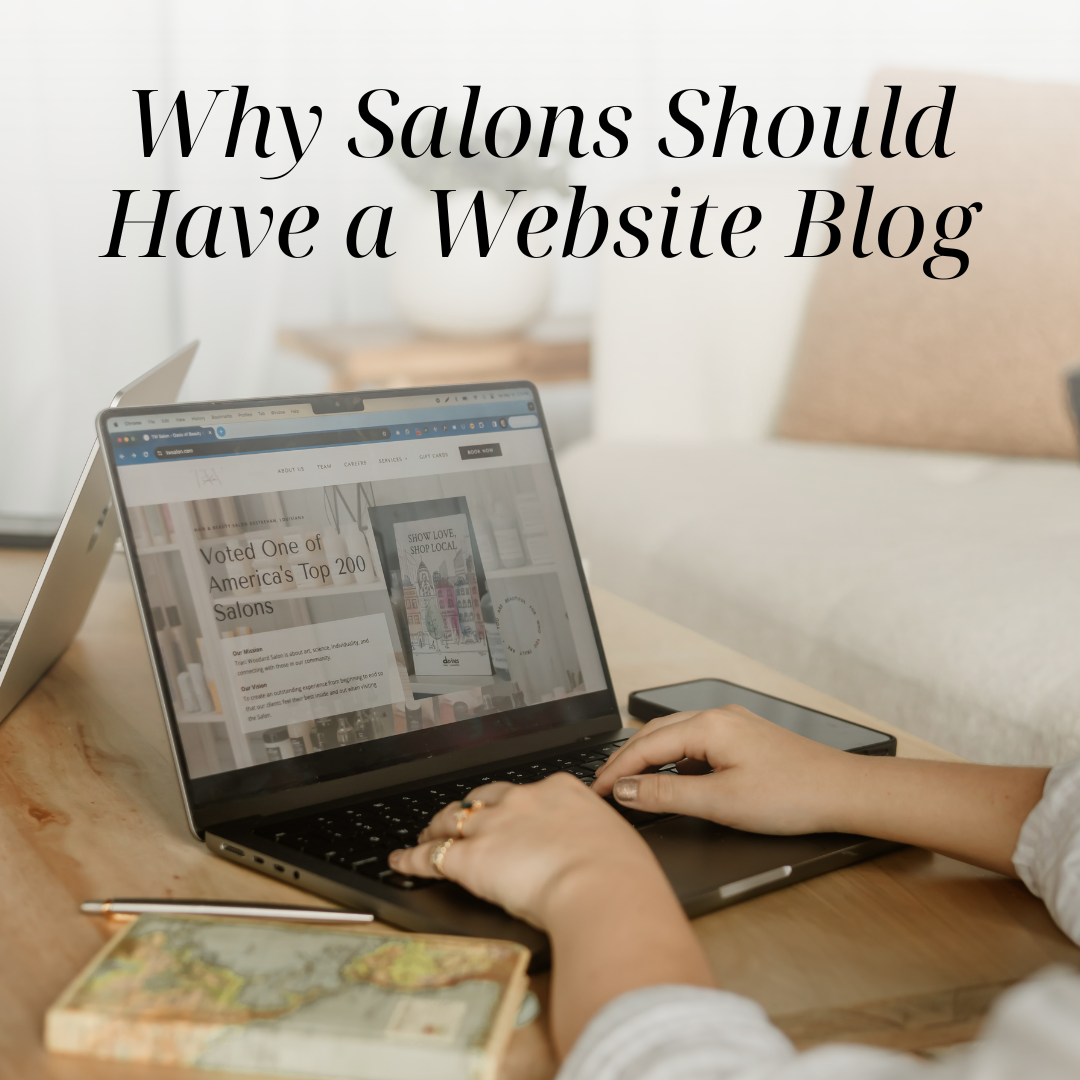
Blogging is one of the most underutilized growth tools in the salon industry.
Not because it’s trendy. Because it works.
And when done strategically, blogging can quietly become one of your salon’s most powerful marketing assets.

What Blogging Actually Does for a Salon
A blog is not an online diary.
It’s not random thoughts.
It’s not filler content.
A blog is structured, searchable content that helps:
- Clients find you
- Clients trust you
- Google understand your expertise
- Your salon rank for more services
- Support long-term visibility
When someone searches:
- “How long does balayage last?”
- “Best hair extensions for fine hair”
- “Hair salon for blondes in [city]”
- “Is keratin safe for colored hair?”
Google looks for answers.
If your website contains those answers, you become visible.
Blogging Strengthens Your SEO
This is where blogging becomes powerful.
Without blog content, your website is limited to:
- Your homepage
- Your service pages
- Your about page
With blog content, you expand your reach.
Each blog post creates:
- New keywords you can rank for
- More indexed pages in Google
- More opportunities to show up in search
- More internal linking strength
- More authority in your niche
A single well-written blog post can rank well for months and even years to come.
Instagram posts disappear in days.
Blog content compounds.

Blogging Builds Authority Before the Appointment
Before someone books, they research.
They want reassurance.
They want clarity.
They want to feel confident.
When your website includes educational content about:
- Extension methods
- Blonding maintenance
- Scalp health
- Product recommendations
- Hair loss solutions
- Color correction
- Team Culture
- Salon & Hair Experience
You position yourself as the expert — before they even sit in your chair.
That authority supports premium pricing.
It filters out price shoppers.
It attracts guests who value expertise.
Blogging Supports Your Social Media Strategy
Blogging and social media should work together.
When you publish a blog, you can:
- Mention it in Instagram captions
- Break it into carousel posts
- Use it for email marketing
- Link it in stories
- Repurpose it for Pinterest
- Reference it during consultations
Instead of constantly creating from scratch, your blog becomes the foundation for your content.
It gives your marketing direction and consistency.
Blogging Helps You Rank for Local Searches
This is especially important for salons.
When you naturally include phrases like:
- “Balayage in Green Bay”
- “Hair extensions in Columbus”
- “Luxury hair salon in Fort Worth”
Within structured blog content, you increase your chances of ranking locally.
Blogging supports local SEO by:
- Reinforcing your services
- Reinforcing your location
- Reinforcing your expertise
The clearer and more specific your content is, the easier it is for search engines to match you with the right client.

What Should Salons Blog About?
You don’t need endless ideas.
You need strategic ideas.
Strong salon blog topics include:
- Service breakdowns (What is lived-in color?)
- Maintenance guides (How often should I refresh my toner?)
- Product education (K18 vs Olaplex — what’s the difference?)
- Trend analysis (2026 blonding trends)
- FAQs you answer daily in the salon
- Extension method comparisons
- Celebrate specialties (Curly Haircare)
- Seasonal hair care tips
- Team Outings & Classes
If you’re answering the same question more than once a week, it should probably become a blog.
How Often Should a Salon Blog?
Consistency matters more than frequency.
For most salons:
- One high-quality blog per month is powerful
- Two per month is strong
- Weekly is excellent (if done strategically)
The goal is not volume.
The goal is relevance and structure.
Common Salon Blogging Mistakes
Even salons that try blogging sometimes miss the strategy.
Common mistakes include:
- Writing without keywords in mind
- Publishing short, thin content
- Too much focus on images and not on the written piece
- Not structuring headings properly
- Never linking blogs to service pages
- Not sharing blog content anywhere
- Giving up too quickly
Blogging is a long-term strategy. It builds momentum over time.
What Results Can Blogging Actually Bring?
When done consistently and strategically, blogging can:
- Increase organic website traffic
- Improve Google rankings
- Bring in better-aligned clients
- Reduce reliance on paid ads
- Strengthen authority in your niche
- Support seasonal promotions
- Improve booking conversions
It is not overnight.
But it is sustainable.
And sustainability is powerful.
Final Thoughts: Blogging Is a Visibility Strategy
Blogging is not about being trendy.
It’s about being discoverable.
It’s about showing up when someone is actively looking for the service you specialize in.
It’s about building something that lasts longer than a social post.
When aligned with your website and SEO strategy, blogging becomes a quiet growth engine — working in the background while you focus on your clients.
And that kind of marketing?
That’s smart.
If you’re ready to turn your salon website into a long-term growth tool, blogging is one of the strongest places to start.