

Before someone visits your salon, spa, medspa, or small business of any kind, they’re probably doing one thing first:
Reading reviews.
Today, online reviews have become one of the most powerful forms of digital word-of-mouth marketing.
A strong review profile can influence search rankings, booking decisions, click-through rates, and overall trust in your business.
Yet many businesses still treat reviews as an afterthought.
The reality is that your reviews are often one of the first impressions potential clients have of your brand. Long before they call, submit a form, or book an appointment, they’re looking to see what others have experienced.

Why Reviews Matter
Reviews Build Trust
Trust is one of the most important factors in any buying decision.
Whether someone is looking for a new hairstylist, choosing a home builder, hiring a landscaper, or selecting an insurance agency, they want reassurance that they’re making the right choice.
Reviews help answer questions like:
- Are they professional?
- Do they deliver quality work?
- Are they reliable?
- Do clients enjoy working with them?
- Would people recommend them?
For many consumers, online reviews carry nearly as much weight as a recommendation from a friend or family member.
The stronger your review profile, the more confident potential clients feel about taking the next step.
Reviews Impact Local SEO
Reviews don’t just influence people—they also influence search engines.
Google considers reviews as part of its local ranking factors when determining which businesses appear in local search results and Google Maps.
Consistently earning quality reviews can help:
- Improve local visibility
- Strengthen your Google Business Profile
- Increase clicks from search results
- Improve Map Pack rankings
- Build authority in your market
While reviews alone won’t guarantee top rankings, they are an important piece of a healthy local SEO strategy.

Why You Should Respond to Reviews
Collecting reviews is important.
Responding to them is just as important.
Many business owners focus heavily on getting reviews but never take the time to acknowledge them.
When you respond to reviews, you show potential clients that you care about customer experience and value feedback.
It also keeps your Google Business Profile active and creates additional content associated with your business. Google keeps track of whether you respond to reviews and how long it takes.
Responding to Positive Reviews
Positive reviews deserve recognition.
A simple response can go a long way toward strengthening customer relationships and showing appreciation.
A good response should:
- Thank the client by name when possible
- Mention the service or experience
- Feel authentic and personalized
- Avoid generic copy-and-paste responses
Even a brief response demonstrates professionalism and gratitude.
Responding to Negative Reviews
Every business receives negative feedback eventually.
The goal isn’t to win an argument.
The goal is to demonstrate professionalism.
Future customers often pay just as much attention to your response as they do to the review itself.
When responding to a negative review:
- Stay calm and professional
- Avoid becoming defensive
- Acknowledge the concern
- Offer to continue the conversation privately
- Focus on finding a resolution
A thoughtful response can help protect your reputation and show prospective clients how you handle challenges.
How to Ask for Reviews
One of the biggest reasons businesses struggle to get reviews is surprisingly simple:
They never ask.
Most happy clients are willing to leave a review if the process is easy and they’re asked at the right time.
Some of the best opportunities to request reviews include:
- Immediately after an appointment or service
- During a follow-up email
- Through a text message campaign
- After a successful project completion
- During a thank-you message
The key is requesting while the experience is still fresh.
Make It Easy
The easier it is to leave a review, the more reviews you’ll receive.
If clients have to search for your business, navigate multiple pages, or figure out where to leave feedback, many won’t complete the process.
This is where technology can help.
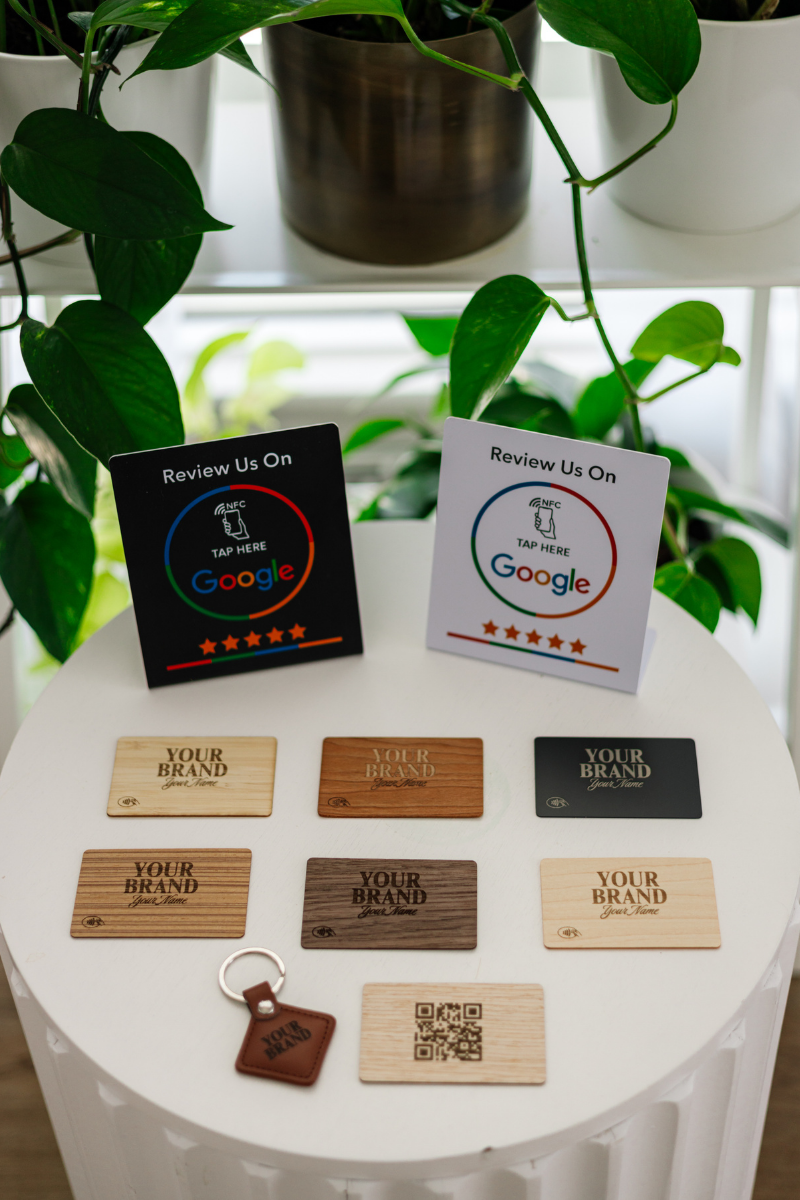
For example, NFC Google Review Stands allow guests to tap their phone and be taken directly to your review page in seconds.
No searching.
No typing.
No extra steps.
Removing friction from the process can significantly increase review participation.

What If You Get a Bad Review?
A few negative reviews won’t ruin your business.
In fact, a profile with a mix of positive and occasional negative reviews often appears more authentic than one with only perfect ratings.
The most important thing is how you respond.
Before reacting, ask yourself:
- Is the feedback legitimate?
- Is there an opportunity to improve?
- How would I want future customers to see this response?
Sometimes, a professional, empathetic reply can turn a negative situation into a positive reflection of your business.
And remember—one negative review surrounded by dozens or hundreds of positive reviews carries far less weight than many business owners fear.
Can You Remove a Google Review?
Sometimes—but removal depends on whether the review violates Google’s policies. Business owners cannot delete reviews themselves, and Google won’t remove a review simply because it’s negative or you disagree with it.
Google may remove reviews that include:
- Spam, fake reviews, or content unrelated to a genuine experience
- Harassment, threats, or hate speech
- Content that violates its policies on offensive language or profanity
- Conflicts of interest, including reviews from competitors or current or former employees
- Personal or confidential information shared without consent
If you believe a review violates these policies, you can report it through your Google Business Profile or use Google’s Reviews Management Tool.
Sign in with the Google account connected to your Business Profile and select your business. The tool lets you report a review, check the status of a removal request, and submit a one-time appeal for eligible reviews if Google initially decides against removal.
When reporting or appealing, explain which policy the review violates and include relevant details to support your request.
Removal isn’t guaranteed. Responding professionally and consistently inviting clients to share honest feedback remain essential parts of managing your online reputation.
Common Review Mistakes Businesses Make
Many businesses unintentionally hurt their review strategy by making a few common mistakes:
- Never asking for reviews
- Only asking once
- Ignoring positive reviews
- Ignoring negative reviews
- Making the process difficult
- Waiting too long after the service to ask
- Buying fake reviews
- Focusing on quantity instead of authenticity
The strongest review profiles are built consistently over time through genuine customer experiences.

Focus on Building More Positive Reviews
The best way to manage your online reputation isn’t to obsess over the occasional negative review.
It’s consistently creating great experiences and encouraging happy clients to share them.
Over time, positive reviews help:
- Build trust
- Improve local SEO
- Increase conversions
- Strengthen credibility
- Support long-term business growth
Every review contributes to the story your business tells online.
Final Thoughts
Reviews are more than testimonials.
They’re one of the most powerful marketing assets your business owns.
They influence trust, visibility, bookings, and purchasing decisions long before someone ever contacts your business.
When you actively collect, respond to, and learn from reviews, you’re doing more than managing your reputation.
You’re building trust before you ever meet a client.
And in today’s digital world, that trust can make all the difference.